


Stuttering isn’t a mystery or a lack of willpower; it’s a physical motor-speech habit that you can systematically replace with a new set of skills. You’ve likely spent years in traditional therapy learning to “manage” your speech, only to find those techniques fail the moment you face a high-pressure job interview or an unexpected phone call. It’s exhausting to feel like your own voice is an uncontrollable physical glitch that ignores your best efforts. You deserve a solution that works in the real world, not just in a quiet clinical setting.
In 2026, the global approach to fluency is shifting away from simply coping with the condition toward building a physical toolkit for total control. This article provides a definitive checklist of stuttering strategies designed to help you understand the mechanics of your speech and master the skills needed for permanent change. We’ll explore how to stop fighting your old habits and start training your body for fluent communication. By the end of this guide, you’ll have a clear, actionable path to speak with authority and confidence in any environment you choose.
Key Takeaways
- Stop relying on willpower and start using physical motor-speech tools that address the mechanics of your speech.
- Master a step-by-step physical checklist of stuttering strategies to gain control over every word you speak.
- Learn how fluency shaping builds a new speech pattern that is physically incompatible with stuttering.
- Discover how to maintain controlled fluency during high-pressure job interviews and public speaking engagements.
- Transition from a temporary checklist to permanent change through intensive training that rewires your speech habits.
What Are Stuttering Strategies? Moving Beyond Willpower
You’ve likely been told to “just breathe” or “think before you speak.” These aren’t real stuttering strategies. They are mental Band-Aids that ignore the physical reality of how your body produces sound. Effective strategies are physical motor-speech tools that give you direct control over your vocal mechanism. When you experience a block, your body is performing a specific, learned behavior. You can’t stop that behavior by using willpower alone. You must replace it with a different physical action that is incompatible with stuttering. This shift in perspective transforms speaking from a stressful accident into a deliberate skill you can master.
Trying to force your way through a stutter is like trying to drive a car with the parking brake engaged. The harder you press the gas, the more damage you do. Research shows that 85% of adults who have had speech treatment have undergone two or more different types of therapy, often because they were taught to “manage” the problem rather than replace the physical habit. You don’t need more willpower; you need a better toolkit.
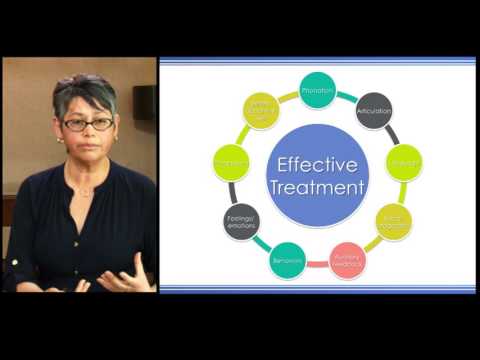
To better understand how these behavioral roadblocks work, watch this helpful video from the American Speech-Language-Hearing Association:
The Willpower Trap in Speech
When you try to force a word out through sheer willpower, you actually increase the physical tension in your vocal folds. This creates a destructive feedback loop where the fear of stuttering leads to more tension, which then triggers a block. The Valvalar mechanism is the physical source of blocks, acting as a survival reflex that locks the vocal folds together when the brain perceives a threat. Trying to push through this lock only makes it tighter. Understanding the difference between stuttering modification vs. fluency shaping is the first step in breaking this cycle and regaining control.
Fluency as a Motor Skill
Think of fluent speech as a motor skill, similar to a professional golf swing or playing the piano. You don’t achieve a perfect swing by wishing for it; you achieve it through specific physical targets and consistent repetition. Speech is no different. You need a physical toolkit that tells your brain exactly what to do with your breath, your vocal folds, and your articulators. Skills require structured practice and clear instructions. For those looking for rapid results, the 5-day intensive path provides a focused environment for rapid skill acquisition. By treating speech as a physical discipline, you gain the agency to speak clearly in any situation.
The Essential Physical Checklist for Fluent Speech
Fluency is the result of a precise physical sequence. If you miss one step in the sequence, your motor-speech system can lock up. Most people who stutter rely on “cheats” like word switching or using filler sounds to bypass difficult words. These habits don’t help; they actually reinforce the fear and physical tension that cause blocks. To achieve lasting results, you must replace these avoidance behaviors with a reliable order of operations. Think of this checklist as your flight manual for speech. When you follow the steps, the physical system functions as intended.
The National Institute on Deafness and Other Communication Disorders notes that stuttering involves complex physical interactions within the body. Mastering these stuttering strategies requires you to take conscious control of those interactions. You are moving from accidental speech to intentional, skilled communication.
Step 1: Passive Airflow and Gentle Onset
Every sound you make begins with breath. A common mistake is trying to speak while holding your breath or after you’ve already exhaled half of it. You must master the “Easy Onset.” This involves initiating a tiny amount of passive airflow before you engage your vocal folds. You should feel the cool air pass over your vocal folds for a split second before the sound begins. This prevents the vocal folds from slamming shut in a block. Coordinate your breath so the air and the sound start almost simultaneously, but with the air leading the way.
Step 2: Light Articulatory Contact
Blocks often happen when you press your lips or tongue together too hard. This “hard contact” creates the physical clench you feel on sounds like P, B, or T. You must train your articulators to touch with zero pressure. Think of your lips as feathers, not clamps. Practice your plosives by barely letting the articulators meet. If you feel any pressure building up, you’re pushing too hard. Light contact keeps the speech mechanism relaxed and ready for the next sound.
Step 3: Continuous Phonation
Once you start speaking, you must keep the “motor” running. Stuttering often occurs during the silence between words when the vocal folds stop vibrating. Continuous phonation means you blend your words together into a single, flowing stream of sound. Do not let the vibration stop until you reach a natural pause for breath. This forward momentum makes it physically difficult for a block to occur. For a deeper look at the mechanics of this process, check out our guide on how to avoid stuttering. Keeping the voice “on” is the secret to maintaining a fluent forward flow.
If you’re ready to stop managing your stutter and start replacing it with a new way of speaking, you can access our free fluency training here to see these techniques in action.


Stuttering Modification vs. Fluency Shaping: Which Strategy Wins?
Choosing the right approach is the difference between surviving a conversation and commanding it. In the world of speech therapy, two primary schools of thought dominate the landscape. Stuttering modification focuses on “stuttering more easily” by reducing the tension and struggle during a block. Fluency shaping, on the other hand, focuses on building a new physical motor program that prevents the block from occurring in the first place. While both have their place, your choice depends on your ultimate goal. If you want to stop fighting your speech and start speaking with total control, you must understand how these stuttering strategies differ in practice.
A 2026 survey by the National Stuttering Association revealed that while 50% of adults found value in changing their attitudes toward speech, a significant majority still sought physical tools that provide reliable fluency. For the high-stakes professional, “managing” a stutter during a presentation isn’t enough. You need a system that replaces the old habit entirely. Enrolling in a specialized adult stuttering therapy program is the most direct way to make that replacement permanent and build the controlled, fluent speech you need for professional success.
The Philosophy of Modification
Stuttering modification is often associated with the Van Riper approach. It teaches you to stay in the moment of stuttering and “slide out” of it using specific techniques. Common tools include:
- Pull-outs: Identifying a block while it’s happening and consciously reducing tension to finish the word.
- Cancellations: Pausing after a stuttered word and repeating it with a more relaxed physical approach.
- Preparatory Sets: Anticipating a difficult word and planning a relaxed onset before you speak.
This method is excellent for desensitization and reducing the shame associated with speech. It helps you become a “better stutterer.” However, the core limitation is that the stuttering pattern remains present. You’re still reacting to a problem rather than preventing it.
The Power of Fluency Shaping
Fluency shaping is a proactive strategy. It doesn’t wait for a block to happen; it creates a “New Way to Speak” that is physically incompatible with stuttering. This method builds your speech from the ground up by focusing on the mechanics of airflow, vocalization, and articulatory movement. Instead of managing a glitch, you are installing a new motor program. This is why fluency shaping is the primary focus of specialized adult therapy. It treats speech as a physical skill that can be mastered through repetition and precision. For those who need to speak with authority in job interviews or public forums, this proactive approach offers the most direct path to confident, stutter-free communication. You aren’t just modifying an old habit; you’re developing a superior one.
Applying Strategies in High-Pressure Situations
High-pressure moments are where most techniques crumble. You’ve mastered the physical mechanics in a controlled environment; now you must execute them when the stakes are highest. This transition is known as “Transfer.” It’s the process of moving your skills from a quiet room to a high-stakes boardroom. In professional settings, your listeners value clarity and authority over the speed of your delivery. Speaking slightly slower allows your motor-speech system to keep up with your thoughts. It’s always better to be deliberate and fluent than fast and blocked. You must give yourself permission to take up space with your voice.
The goal is to move from a reactive state to a proactive one. When you feel the familiar surge of adrenaline, your body’s natural reflex is to tighten the vocal folds. You must counter this by doubling down on your physical stuttering strategies. Do not let the environment dictate your speech. You are the operator of your speech mechanism, and you decide the pace of the interaction. This mindset shift is essential for anyone looking to maintain control in 2026’s fast-paced professional landscape.
The Job Interview Checklist
An interview is a performance. You can reduce the internal pressure by disclosing your fluency goals early in the conversation. Tell the interviewer you’re using specific stuttering strategies to ensure clear communication. This simple act removes the “secret” of stuttering and allows you to focus entirely on your physical targets. Use deliberate, slightly slower phrasing to stay ahead of your motor program. Prepare “fluency scripts” for common questions like “Tell me about yourself.” Having a practiced motor plan for these answers prevents the panic that often triggers a physical block. When you have a plan, you have confidence.
Managing Telephobia and Group Meetings
Phone calls create an invisible pressure because you lack visual feedback from the listener. To stay fluent, maintain your physical targets even when you can’t see the other person. Use a headset to keep your hands free, which helps reduce physical tension in the upper body. If you are interrupted in a group meeting, don’t rush to reclaim the floor. Take a controlled breath, re-establish your passive airflow, and enter the conversation with a gentle onset. You’re in control of the pace. If you struggle specifically with the fear of phone calls when you stutter, understanding the unique “Visual-Feedback Gap” that makes calls so challenging is a critical step toward mastering this environment. Success in these environments requires the discipline to execute your skills when your heart is racing. You can watch a free training to see how these professional fluency techniques work in real-world scenarios. Mastering these skills in public is the final step toward speaking without fear.
Beyond the Checklist: Training for Permanent Change
A checklist is a vital starting point, but it isn’t the finish line. You don’t learn to drive a car just by reading the manual; you have to get behind the wheel and practice until the movements become automatic. The stuttering strategies we’ve discussed are physical tools that require deep neurological integration. If you only attempt to use them when you’re already in a state of panic, you’ll likely fail. You must train your brain and body to choose these new patterns by default, even when you aren’t consciously thinking about them. This is the difference between simply “knowing” what to do and actually “doing” it under the pressure of a real-world boardroom.
The transition from a clinical setting to everyday life is where the real work happens. It’s about moving from accidental speech to intentional, skilled communication. You’ve spent years reinforcing the physical habit of stuttering. Replacing that habit requires a dedicated period of focused effort. Once you automate these physical targets, the fear of speaking begins to dissolve because you finally have a reliable way to produce sound. For adults who believe they are simply stuck with their stutter, a speech and language therapy program designed specifically for adults can demonstrate that lasting fluency is achievable at any stage of life through focused, physical skill-building.
Why 5 Days Can Change 20 Years
The science of immersion is clear. To replace a deeply ingrained motor habit, you need intense, concentrated practice. Traditional therapy often fails because once-a-week sessions don’t provide enough repetition to create lasting neural pathways. You spend 45 minutes in a clinic and then return to 167 hours of your old speaking habits. It’s a losing battle. Our 5-day intensive model acts as a “bootcamp” for the brain, forcing your motor-speech system to stay in the new program long enough to make it the new baseline. By the end of this period, you aren’t just “trying” a technique. You are operating within a new way of speaking that has become your primary habit.
The Role of the Specialist Mentor
You wouldn’t hire a general fitness trainer to prepare you for a professional athletic career. You’d find a specialist. Working with a mentor who focuses specifically on the mechanics of fluency is critical. They understand the intricate physical interactions of your speech system, not just the psychological theory. A mentor acts as a coach who can spot the tiny physical glitches in your execution before they turn into full blocks. They provide the objective feedback you need to refine your stuttering strategies until they are second nature. Long-term success also relies on follow-up and refresher sessions to ensure your skills stay sharp as you face new professional challenges.
Fluency is a choice you make every day by deciding to use your physical tools. You have the power to decide how you show up in every conversation. It’s time to stop letting your speech happen to you and start making it happen for you. Learn more about the 5-Day Intensive Program and take the first step toward a lifetime of controlled, confident speech.
Master Your Fluency and Speak with Authority
You now have the blueprint to transform your communication. We’ve established that stuttering isn’t a lack of willpower; it’s a physical motor-speech habit that you can unlearn. By applying precise stuttering strategies like gentle onsets and continuous phonation, you move from reacting to blocks to preventing them entirely. This proactive approach is exactly what’s required for success in the boardroom and during high-stakes job interviews.
True change requires more than just a checklist; it demands structured, intensive practice under the guidance of an expert. Led by Board Certified Specialist Mark Power, our program leverages over 35 years of clinical experience to deliver rapid, lasting results through our 5-Day Intensive model. Don’t spend another year feeling trapped by your own voice. Register for our Free Fluency Training and see the 5-Day Intensive in action. Your journey to controlled, confident speech starts with a single, decisive step. You have the tools; now it’s time to use them. Let’s get to work.
Frequently Asked Questions
What are the most common stuttering strategies for adults?
The most effective stuttering strategies for adults involve physical motor-speech targets like easy onset, light articulatory contact, and continuous phonation. These tools aren’t mental tricks; they are specific physical actions that ensure your vocal folds and breath work in harmony. Instead of trying to “not stutter,” you focus on executing these precise movements to maintain a forward flow of speech. This shift in focus gives you direct agency over your voice.
How can I stop stuttering when I am nervous or in an interview?
To stop stuttering during an interview, you must disclose your speech goals early and use deliberate, slightly slower phrasing. Disclosure removes the pressure of hiding your stutter, which immediately lowers your physical tension. Once the “secret” is out, you can focus entirely on your physical targets. This proactive approach keeps you in control of the motor-speech program regardless of the adrenaline you feel in the moment.
Do stuttering strategies actually work for severe stutters?
Yes, physical strategies are highly effective for severe stuttering because the underlying mechanics of a block remain the same regardless of severity. Severe stuttering is simply a more intense physical habit of locking the vocal mechanism. By learning to replace that clench with passive airflow and gentle onset, you can dismantle even the most persistent blocks. It’s about retraining the motor system with precision and consistent repetition.
What is the difference between fluency shaping and stuttering modification?
Fluency shaping creates a completely new, stutter-free speech pattern, while stuttering modification focuses on stuttering more easily. Modification is a reactive approach that helps you “slide out” of a block once it starts. Shaping is a proactive strategy that prevents the block from occurring by installing a new motor program. For professionals who require total control, shaping is often the preferred choice for reliable, clear communication.
Can I learn stuttering strategies on my own or do I need a therapist?
While you can read about the theory on your own, you need a Board Certified Specialist to ensure you are executing the physical movements correctly. A specialist provides the objective feedback necessary to spot tiny physical glitches that you might miss. This partnership helps you move from understanding the concepts to mastering them as reliable, automatic skills that work in the real world, not just in practice.
How long does it take to master these speech techniques?
You can acquire the core physical skills in a 5-day intensive program, but total mastery takes consistent real-world application. The intensive “bootcamp” model is designed to jumpstart the neural pathways needed for a new way to speak. After the initial training, you must use your stuttering strategies in everyday situations to ensure the new habit becomes your dominant speaking pattern. Consistency is the key to permanent change.
Why do I stutter more when I try to use a strategy?
You may stutter more initially because you are likely trying to “force” the strategy, which increases physical tension. This is the willpower trap. If you press too hard or hold your breath while trying an easy onset, you’ll trigger a block. Success comes from precision and relaxation, not sheer effort. You must focus on the passive movement of air rather than the struggle to force the words out.
Is there a permanent way to avoid stuttering during phone calls?
Avoiding stuttering on phone calls is possible by automating your new speech patterns until they are the dominant habit. Telephobia is often driven by the lack of visual feedback and the pressure of silence. Using a headset can help reduce upper-body tension. By maintaining continuous phonation and gentle onsets, you can keep the speech motor running smoothly throughout the entire conversation without the fear of a block occurring. For a deeper understanding of why the fear of phone calls when you stutter feels so uniquely paralyzing, and how to dismantle it with targeted physical strategies, explore our dedicated guide on conquering telephobia.


Article by
Mark Power
